


Ichouka (萎凋香) is a term that deserves a bit of explanation, because it describes something quite special in Japanese tea processing.
- 萎凋 (ichō) means withering — a process in which freshly picked tea leaves are allowed to gently wilt before steaming.
- 香 (ka) means fragrance or aroma.
Put together, Ichouka can be understood as “an aroma created through withering.”
What does that mean in practice?
The purpose of withering in this context is often to encourage the development of floral or fruity aromas. These are lightly oxidized, highly aromatic notes that are not typical of standard Japanese green tea processing.
In other words, Ichouka points toward a style of tea that steps slightly outside the usual Japanese profile—without fully becoming oolong or black tea. It’s subtle, elegant, and intentionally expressive.
From Hanaka to Yuuka
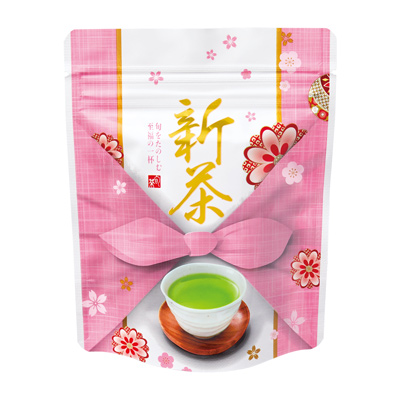
Last year, our Shincha Hanaka—a poetic interpretation of the idea behind Ichouka—was met with great enthusiasm. Because of that response, this year we are offering two new variations, made from the cultivars Koshun and Sayama Kaori.
This time, however, they come under a new name: Shincha Yuuka (優甘).
Let’s break that down as well.
- 優 (yū)
Meaning: gentle, refined, elegant, kind
In terms of taste, it suggests softness, balance, and an elegant character. - 甘 (kan / amai)
Meaning: sweet
In tea, this refers to natural sweetness—umami and gentle sweet notes in the finish.
Together, 優甘 (Yuuka) can be translated as “gently sweet” or “nobly sweet.” In the poetic language often used in Japan, it’s a name meant to evoke the tea’s flavor profile rather than describe it directly: an elegant, balanced sweetness that feels natural and calm.
Yuuka is not about intensity or surprise.
It’s about finesse, aroma, and a quiet kind of sweetness that unfolds slowly in the cup.
Leave a Reply