


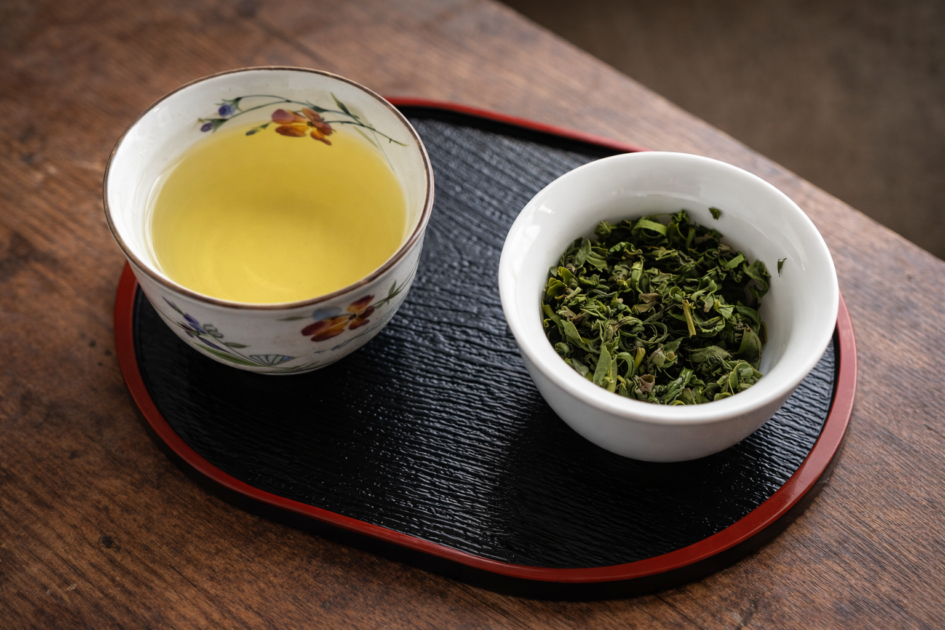
Japanese oolong is a remarkable tea that brings together elements of Japanese, Taiwanese, and Chinese tea traditions. This semi-oxidized tea sits both visually and in flavor somewhere between green and black tea. In Japan, loose-leaf oolong is far less common than traditional green teas. As a bottled drink in PET bottles, however, it enjoys great popularity and is a familiar sight in shops and vending machines across the country.
Unlike black tea, oolong is not fully fermented but undergoes controlled oxidation. The degree of oxidation varies depending on the processing style, influencing both the color and the flavor of the tea—from light, delicately floral profiles to fuller, fruit-forward and lightly roasted notes. After oxidation, the leaves are roasted, shaped, dried, and sometimes further fired, all of which contribute to oolong’s smooth and balanced character.
Aroma and taste profile
The aroma of Japanese oolong is gentle and floral, with subtle regional variations. Teas from Kagoshima Prefecture often show more pronounced floral notes, while oolongs from Nara Prefecture may carry soft hints reminiscent of cherry blossoms. On the palate, Japanese oolong is smooth and well-balanced, offering layers of fruit, flowers, honey, and occasionally a light grassy touch. Thanks to its semi-oxidized nature, it is generally less bitter than many green teas.
Traditionally, oolong is served in small ceramic cups and is enjoyable both hot and chilled. It pairs beautifully with Japanese dishes such as sushi or tempura, but it also works well alongside richer, fattier foods.
Health benefits of Japanese oolong
Japanese oolong is valued not only for its flavor but also for its potential health benefits. It contains flavonoids and antioxidants that help protect cells from free radicals and may reduce the risk of chronic diseases, including heart-related conditions.
Like other teas, oolong may support cardiovascular health, help lower cholesterol levels, and aid digestion. One of its most appreciated qualities is its ability to assist in the digestion of fatty foods. It supports the breakdown of fats and lipid metabolism, which can ease the stomach and reduce the feeling of heaviness after a rich meal. For this reason, oolong is often recommended as a tea to drink after heavier dishes.
Fatty acids are the basic building blocks of fats (lipids). Chemically, they are long chains of carbon and hydrogen ending with a carboxyl group (-COOH). In the human body, they appear as part of:
- triglycerides (the main form of fat in food and in the body, stored in fat tissue),
- phospholipids (which form cell membranes),
- and free fatty acids in the bloodstream, released from fat stores as an energy source.
Some studies also suggest additional benefits. Regular consumption of oolong tea may have a positive effect on cognitive function and memory and may contribute to weight management.
A rare tea for curious tea drinkers
Japanese oolong is one of the less common teas produced in Japan, which adds to its sense of exclusivity. Limited production often translates into a higher price, but its unique flavor profile and potential health benefits have earned it a dedicated following.
Because of its rarity, Japanese oolong also makes an excellent gift for tea lovers or an interesting addition to a collection of fine teas. For those looking to explore something new and slightly unexpected within the world of Japanese tea, it is a compelling choice.
In the end, Japanese oolong represents a harmonious balance of gentle flavor, rich aroma, and positive effects on well-being. If you enjoy Japanese teas or are simply curious to discover a new dimension of taste, Japanese oolong is well worth exploring.
Leave a Reply