


This year, I let myself be influenced a little by my friend Michael Škála. I ended up cancelling an order for Sencha Fushun and asked instead for an oolong made from the same cultivar.
In Japan, wakocha or more heavily oxidized oolong made from the first harvest is considered a rarity. That is why these teas usually come with a higher price tag. It’s also a very practical decision on the producer’s side: teas like this are made at the expense of sencha. In other words, producing something less common means deliberately giving up part of the mainstream production.
Making a more oxidized oolong from the first harvest is genuinely challenging. At this time of year, leafhoppers (unka)—which naturally nibble on the leaves and contribute to the tea’s pleasant sweetness—are still barely present. The sweet notes therefore don’t develop naturally. They have to be created through careful processing and the skill of the producer.
I won’t lie—Suzuki had his doubts about whether he could really pull it off this year.
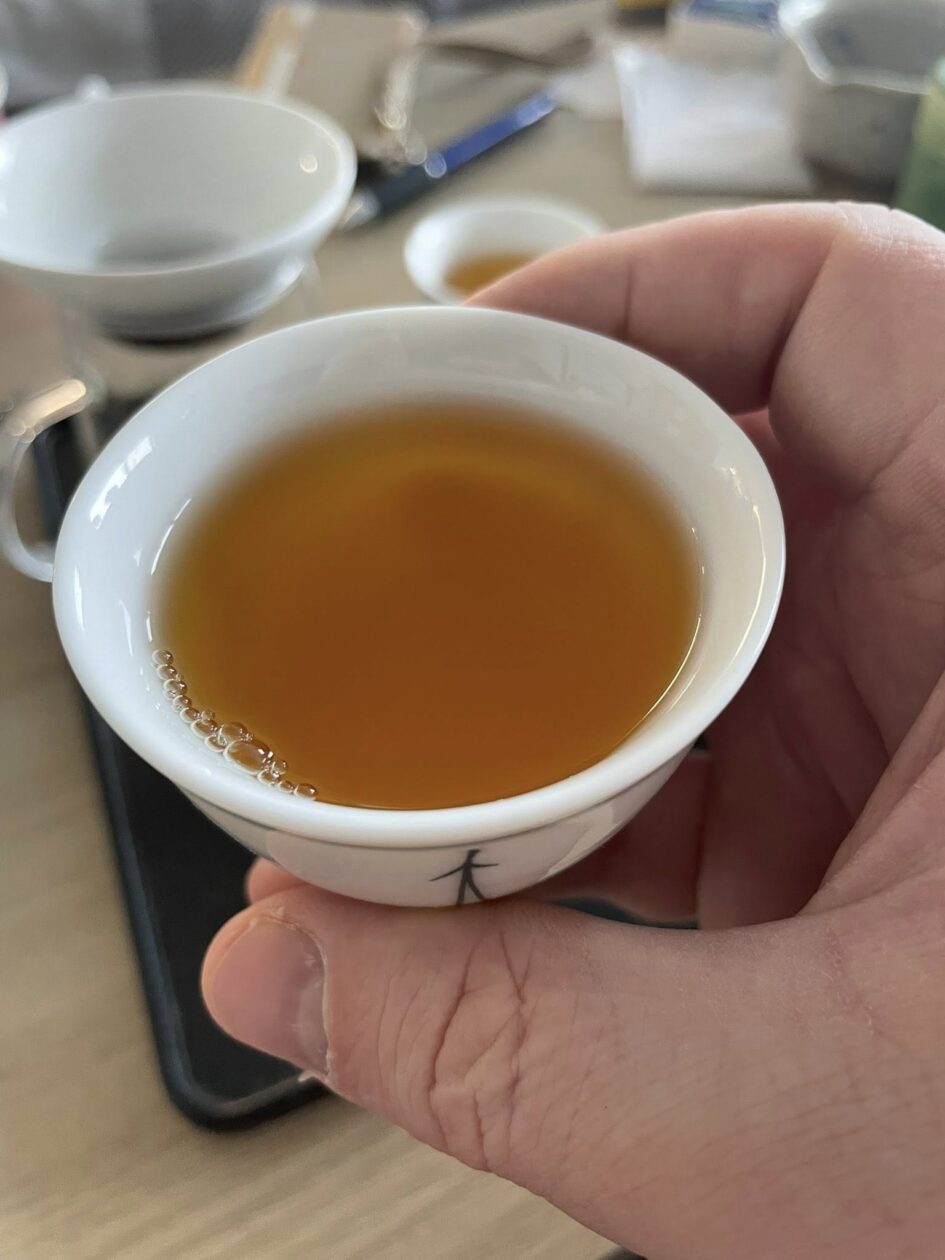
In the end, though, both the aroma of the dry leaves and the liquor are surprisingly beautiful, with clear honey-like notes. The taste is still very fresh, and it will probably need another two to three months for that freshness to soften and for the desired honeyed character to fully emerge.
Even so, the overall impression is already very good. And I have to say—I’m genuinely excited to see how this tea develops over time.
Leave a Reply