


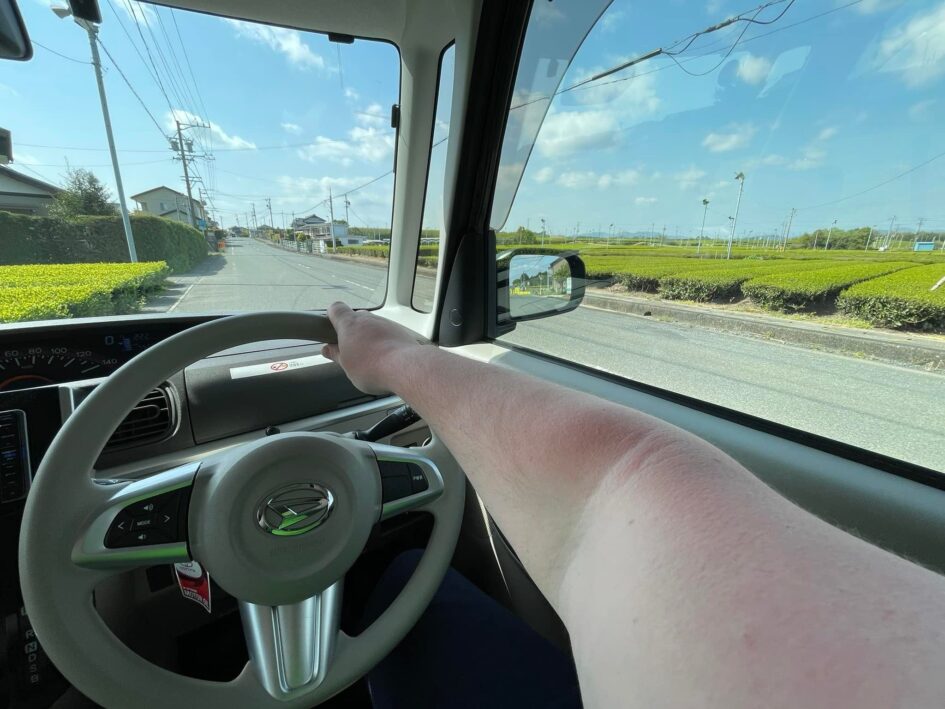
When you go through Kakegawa, a city neighboring my beloved Morimachi, it’s hard not to feel how deeply tea is woven into everyday life here. Morimachi is special to me—not only do I have family there, but also many close friends. And in Kakegawa, I know several farmers personally. Their Fukamushi sencha teas are simply outstanding.
Kakegawa is considered one of the birthplaces of Fukamushi sencha. Around here, people don’t really drink anything else. There’s a simple local belief:
the deeper the steaming, the better the tea.
If you go one step further, to neighboring Makinohara, you’ll find this philosophy taken even further. In Makinohara, tea leaves can be steamed for up to two minutes, resulting in Tokumushi or even Gokumushi sencha—some of the most intensely steamed green teas in Japan.
For Fukamushi sencha itself, the leaves are typically steamed for about one minute. That extra steaming breaks down the leaf structure, producing a rich, deep-green liquor with strong umami, low bitterness, and a smooth, almost creamy texture.
In this part of Shizuoka, deeply steamed sencha isn’t a specialty or a trend.
It’s simply the way tea is meant to be drunk.
Leave a Reply